How it's made
- The slab is placed and screeded like any other.
- A colour hardener, a dry blend of cement, pigment and fine aggregate, is broadcast over the wet surface and floated in. It sets the main colour and gives a dense, hard-wearing top.
- A release agent, often in a contrasting colour, goes on so the stamps don't stick. It leaves darker 'grout' lines and an aged look.
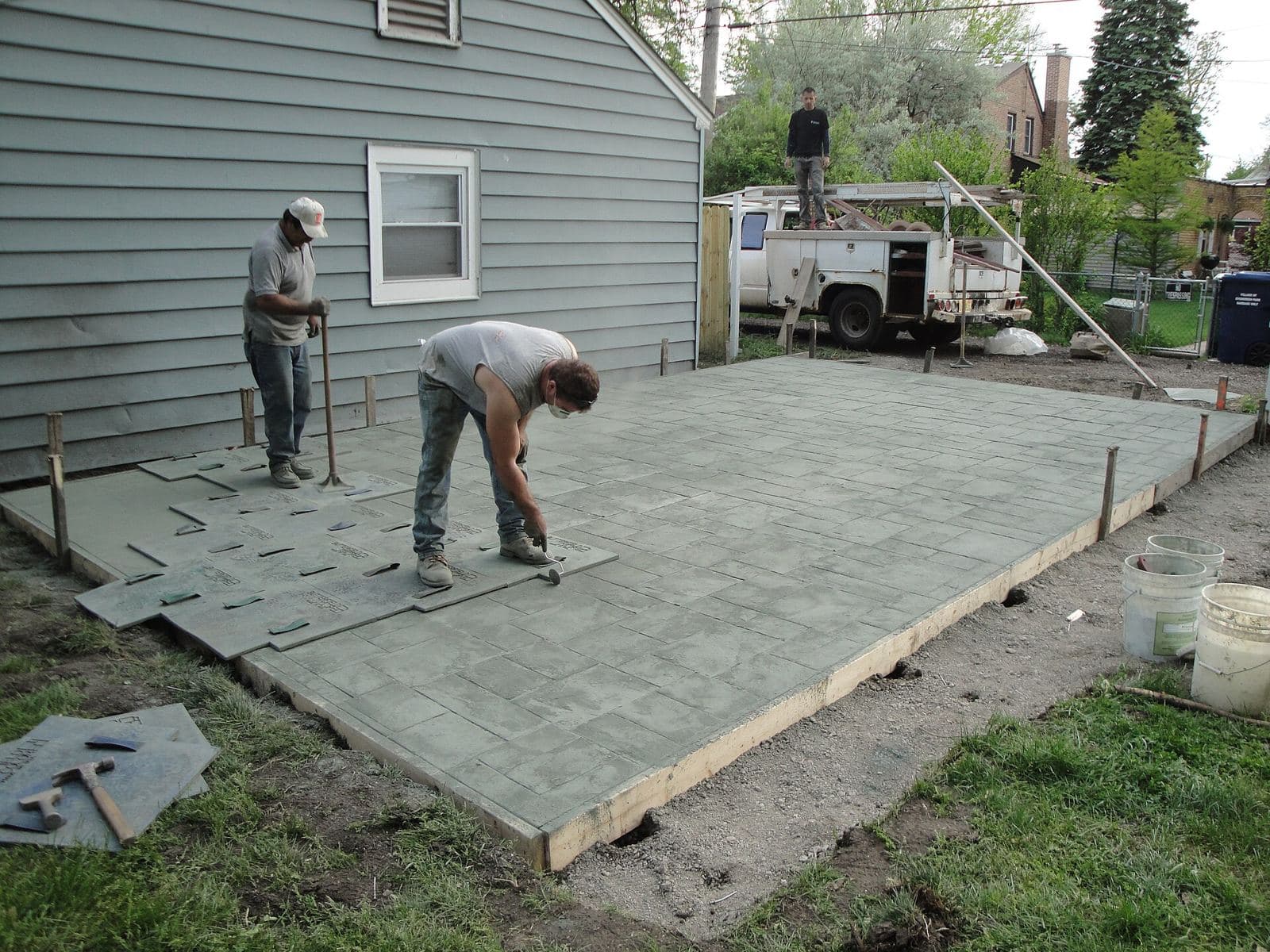
- When the concrete is just stiff enough, the crew lays rubber stamping mats and presses the pattern in, working across the slab before it sets.
- The excess release agent is washed off, usually the next day, control joints are cut along pattern lines where possible, and the slab is sealed once dry.
Stencilled concrete is a close relative. A paper stencil is laid on the fresh concrete and colour applied over it, which gives a flatter pattern with less texture.
The advantages
- One slab. No individual units to rock, sink or spread, and no joint sand to wash out.
- No weeds or ants working up through hundreds of joints.
- A hard top. The colour hardener makes the surface denser and more wear-resistant than plain concrete.
- Design freedom. Borders, mixed patterns and colours can be combined in one pour.
The drawbacks
- Sealing. The sealer carries a lot of the look. Plan on resealing every three to five years, more often on a driveway in full sun.
- Slip. A gloss sealer over a smooth stamped surface is slippery when wet. CCAA lists stamped finishes among those that may be unsuitable on steep driveways; grit in the sealer helps on gentle grades.
- Repairs. Patches and later extensions are hard to match in colour and pattern.
- Cracks. Shrinkage cracks still happen. Good joint planning hides them in the pattern lines, but a stray crack across a cobblestone shows.
- Weather. Stamping depends on the concrete stiffening at the right rate, so hot, windy days are risky for this finish.
- Fashion. Some patterns date. Simple textures such as ashlar slate, or plain concrete with stamped borders, tend to age better than busy cobblestone in strong colours.
Council rules for the crossing
Councils increasingly refuse decorative finishes on the footpath crossing, because they'll only ever repair it in plain concrete. A stamped driveway normally stops at your boundary:
Georges River Council
All Georges River Council rules →- Council's standard is plain (non-coloured) concrete with a broom or wood float finish meeting slip rating R11 or better. Stencilled, stamped, coloured or paved crossings need prior written approval, and any later repair by council or utilities is done in plain concrete only.Source: Georges River Pol-066, 3.2–3.3
Campbelltown City Council
All Campbelltown City Council rules →- Crossings are 125mm thick minimum with F62 mesh at 50mm cover, at least 25MPa, broom finished with bullnosed edges. Other materials need council approval case by case, the layback and kerb must be plain concrete, and council only ever repairs in plain concrete.Source: Campbelltown Crossing Terms, 5.2, 7.1, 7.1.7
Cost against other finishes
| 40m² driveway, level site | Total incl. GST |
|---|---|
| Broom finish | $8,100–$8,800 |
| Exposed aggregate | $9,850–$10,550 |
| Stamped | $11,800–$12,500 |
| Stamped, replacing an old concrete driveway | $15,000–$17,950 |
Most of the premium is labour. Stamping takes a bigger crew working against the clock, plus the hardener, release agent and sealer. The decorative concrete page shows the patterns available.
What would your job cost?
Enter your size, finish and site conditions for an instant estimate, built from the same rates as the figures in this guide.
Common questions
How long does stamped concrete last?
The slab lasts as long as any well-built concrete driveway. How it looks depends on the sealer, which needs renewing every few years. Left unsealed, the colour fades and the surface wears in the wheel tracks.
Is stamped concrete cheaper than pavers?
It depends on the paver and the pattern, so get both priced on the same base preparation. Stamped concrete needs less ongoing work than pavers, but more than a plain slab because of the sealer.
Related services
Sources
Prices in this guide come from our concrete price calculator and update when its rates are reviewed. They are estimates, not fixed quotes: the final price is confirmed at a free site inspection. Council rules were checked against each council's published policy and can change, so confirm with your council before you build.