Three ways to colour concrete
| Method | How it works | Durability |
|---|---|---|
| Integral colour (oxide) | Iron oxide pigment mixed into the concrete at the plant, dosed as a percentage of the cement weight | Colour through the full depth; can't peel or wear off |
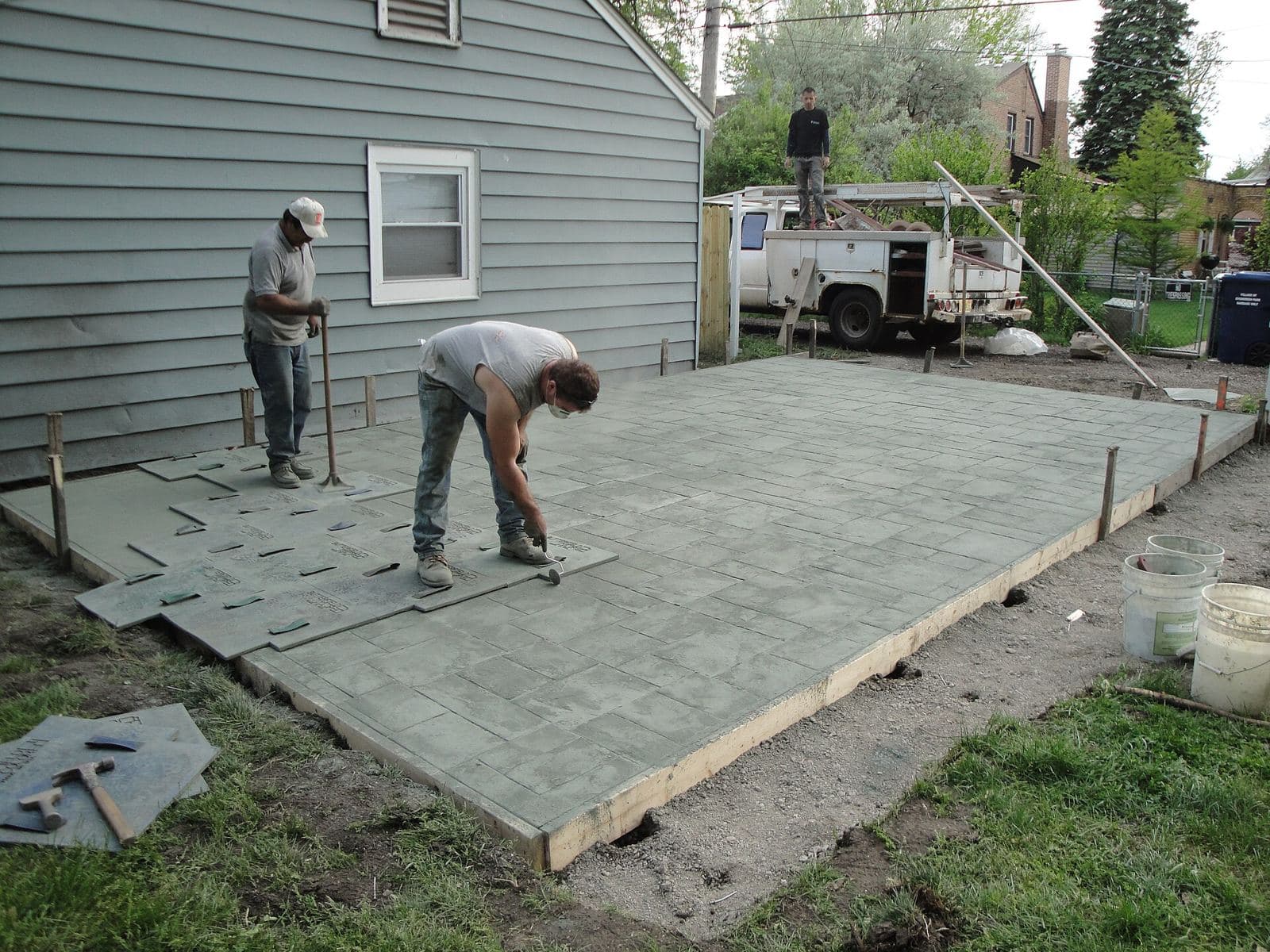
| Colour hardener | Dry colour powder broadcast onto the wet surface and floated in, as on stamped concrete | Strong surface colour and a harder top, but only at the surface |
| Stains and paints | Applied to hardened concrete | Stains hold up reasonably; paint on a driveway wears and peels in the wheel tracks |
Choosing a colour
- See it dry. Wet concrete and sealed samples look darker than the finished slab. Judge a cured, sealed sample in daylight, outside.
- Mid tones forgive the most. Light colours show tyre marks and oil. Very dark colours show dust, leaf stains and white salt deposits. Charcoal-grey and slate sit in the forgiving middle.
- Think about heat. Dark driveways and paths absorb a lot of heat in summer, which matters for bare feet and around pools.
- Match the house. Take your cue from the roof, brick or render you already have, not the brochure.
- Check council rules. Some councils limit the colours you can use where concrete is visible from the street.
Strathfield is one example. Its DCP asks for street-visible concrete to be kept to a minimum and coloured charcoal, grey or brown, with a plain crossing:
Strathfield Municipal Council
All Strathfield Municipal Council rules →- Concrete visible from the street, driveways included, must be kept to a minimum and coloured charcoal, grey or brown. The crossing outside the boundary must be plain natural concrete: coloured or custom finishes aren't permitted there.Source: Strathfield DCP 2005 Part A, 8.2.1(12)–(13)
Keeping the colour even
Colour depends on the concrete as well as the pigment. Cement colour, water content, finishing and curing all shift the result, and some variation between truckloads is normal. For the most even finish:
- Order the whole job from one plant, with the same mix and pigment dose.
- Pour it in one day where possible.
- Don't let anyone add water at the truck. Extra water lightens the colour, as well as weakening the concrete.
- Cure it with a compatible curing compound or sealer. CCAA warns that plastic sheeting, damp sand and wet hessian can cause uneven colour and staining on coloured concrete.
- Seal it to even out the tone and protect the surface.
Efflorescence: the white bloom
White, powdery patches on new coloured concrete are usually efflorescence: salts carried to the surface by moisture and left behind when it evaporates. It shows most on dark colours. It often fades with weathering and can be cleaned off with an efflorescence remover once the slab has dried out. On saline ground, CCAA recommends a plastic membrane under the slab to reduce it.
What colour costs
| 40m² driveway, level site | Total incl. GST |
|---|---|
| Plain float finish | $7,650–$8,300 |
| Broom finish | $8,100–$8,800 |
| Coloured concrete | $8,850–$9,550 |
| Exposed aggregate | $9,850–$10,550 |
Our calculator prices colour as a higher finishing rate, which covers the pigment and the extra care colour work needs. Darker colours take more pigment, so they sit at the top of the range. Coloured concrete is normally sealed, which is an ongoing cost to allow for. The coloured concrete page lists the common colours.
What would your job cost?
Enter your size, finish and site conditions for an instant estimate, built from the same rates as the figures in this guide.
Common questions
Does coloured concrete fade?
Iron oxide pigments are very stable in sunlight, so integral colour lasts. What dulls is the surface: wear, dirt and weathered sealer. Cleaning and resealing brings most of the colour back.
Can you colour an existing concrete driveway?
Only from the top, with a stain, tinted sealer, paint or a thin overlay. None of them last like colour mixed through new concrete, and paint wears quickly where tyres turn.
Related services
Sources
Prices in this guide come from our concrete price calculator and update when its rates are reviewed. They are estimates, not fixed quotes: the final price is confirmed at a free site inspection. Council rules were checked against each council's published policy and can change, so confirm with your council before you build.