Reading mesh names
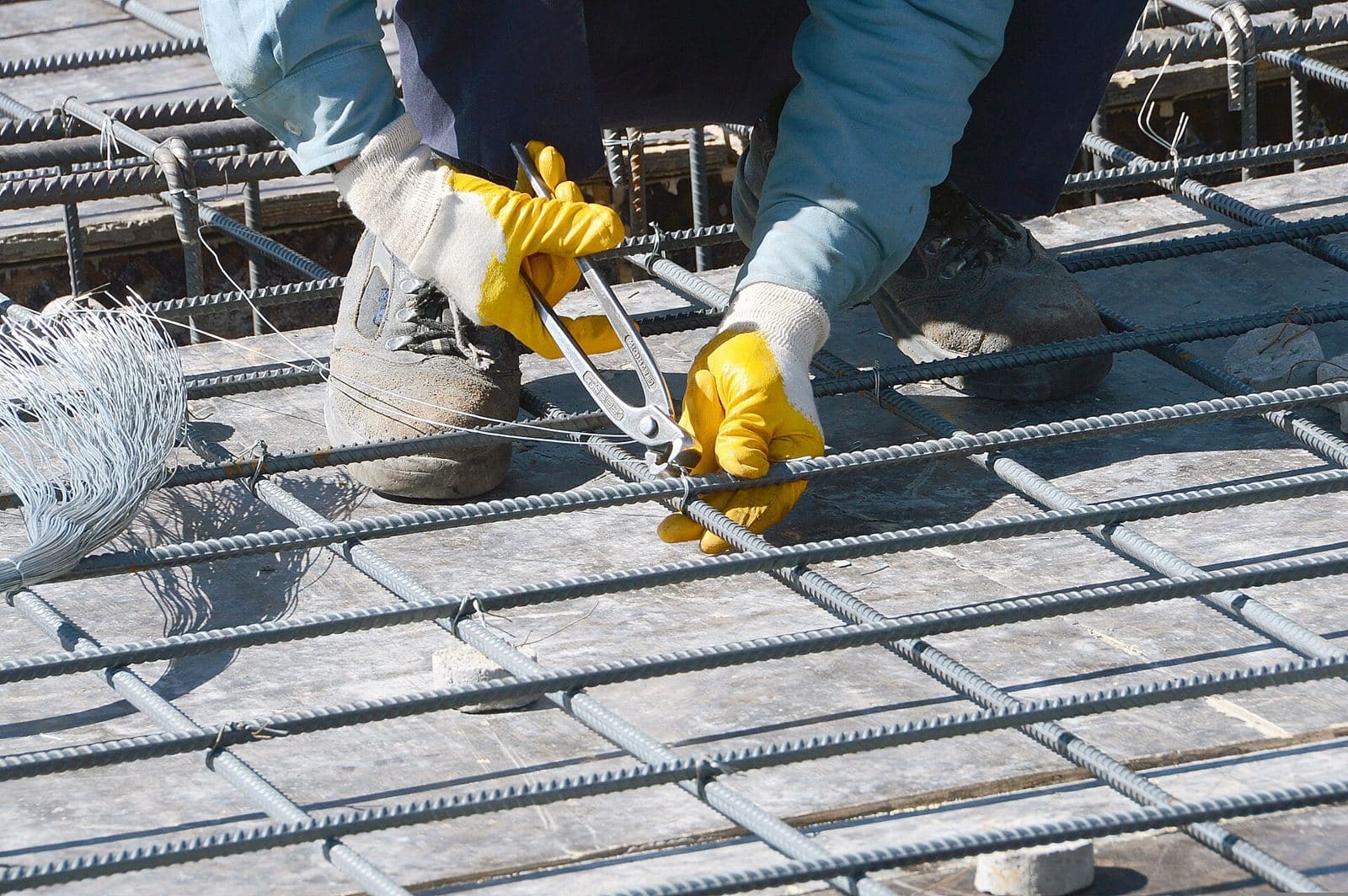
Mesh sheets are named by shape and bar size. SL is square mesh with the same bars both ways at 200mm spacing, and the number roughly tracks the bar diameter. RL is rectangular mesh, for where steel is mainly needed in one direction. TM is trench mesh, narrow strips of three or four bars for footings and edge beams.
| Mesh | Common uses |
|---|---|
| SL62 | Light paths and garden slabs; needs closer bar chairs so it doesn't sag |
| SL72 | The usual mesh for residential driveways, paths, patios and shed bases |
| SL82 | Heavier driveways, garage floors and many house slabs |
| SL92 and up | Engineer-designed slabs, commercial floors and heavier loads |
| Trench mesh | Strip footings and slab edge beams |
Where rebar is used
Rebar is individual deformed steel bars sized by diameter: N12 is a 12mm bar, N16 is 16mm. The bars are cut, bent and tied together on site to the engineer's drawings. You'll find it in:
- Strip, pad and pier footings
- Retaining walls, where the steel takes the bending force from the soil behind
- Slab edge beams and thickenings under load-bearing walls
- Suspended slabs and anything spanning between supports
- Heavy-duty driveways designed by an engineer
For an ordinary driveway, bars instead of mesh buy little. On our calculator, rebar in place of SL72 mesh adds about $400 to a 40m² driveway, and leaving reinforcement out entirely saves about $550. We'd advise against the saving: in an unreinforced driveway, cracks open up and the pieces start moving independently.
Placement matters more than the product
Mesh only works if it ends up inside the concrete at the right height. CCAA's guidance for driveways and paths:
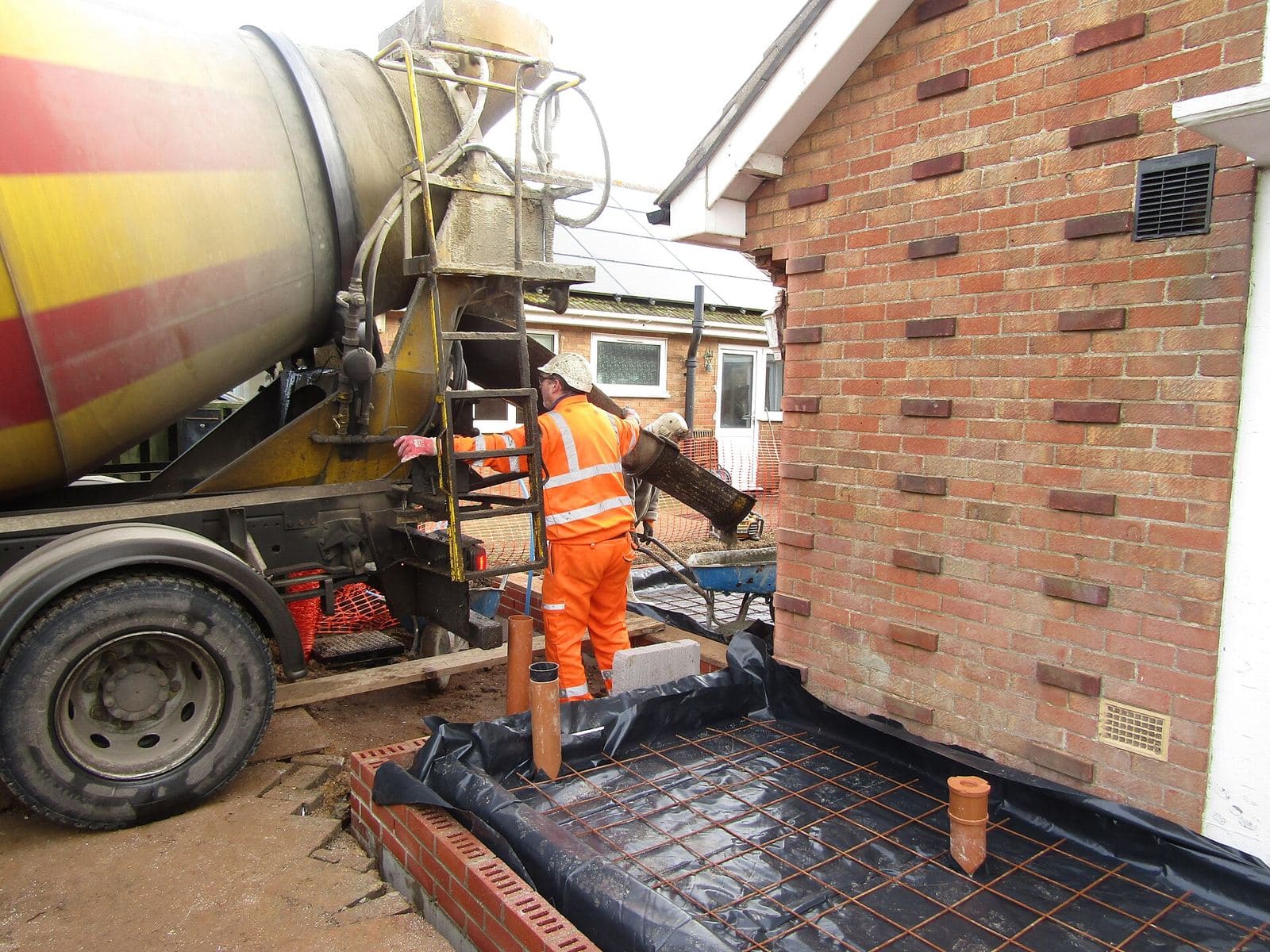
- Mesh sits in the top half of the slab with at least 30mm of concrete over it.
- It's supported on bar chairs no more than 800mm apart, closer for light mesh, so it doesn't sag under the concrete.
- Sheets overlap by at least two cross wires where they join.
- Nobody should walk the mesh into place or hook it up through the wet concrete, and the truck shouldn't drive over it.
- Mesh normally stops about 50mm short of control joints, unless the design runs it through with half the wires cut.
Mesh lying on the dirt at the bottom of the slab does very little. If you're home before the pour, have a look: it should be sitting up on plastic chairs, not flat on the base.
Fibre reinforcement
Synthetic or steel fibres mixed into the concrete are another way to control cracking. Micro fibres mainly reduce plastic shrinkage cracking in the first hours, and structural macro fibres can replace mesh where a design allows. On a driveway, and on anything going to council, check the specification first. Council crossings set their own steel, as Campbelltown's does:
Campbelltown City Council
All Campbelltown City Council rules →- Crossings are 125mm thick minimum with F62 mesh at 50mm cover, at least 25MPa, broom finished with bullnosed edges. Other materials need council approval case by case, the layback and kerb must be plain concrete, and council only ever repairs in plain concrete.Source: Campbelltown Crossing Terms, 5.2, 7.1, 7.1.7
Steel and cracks
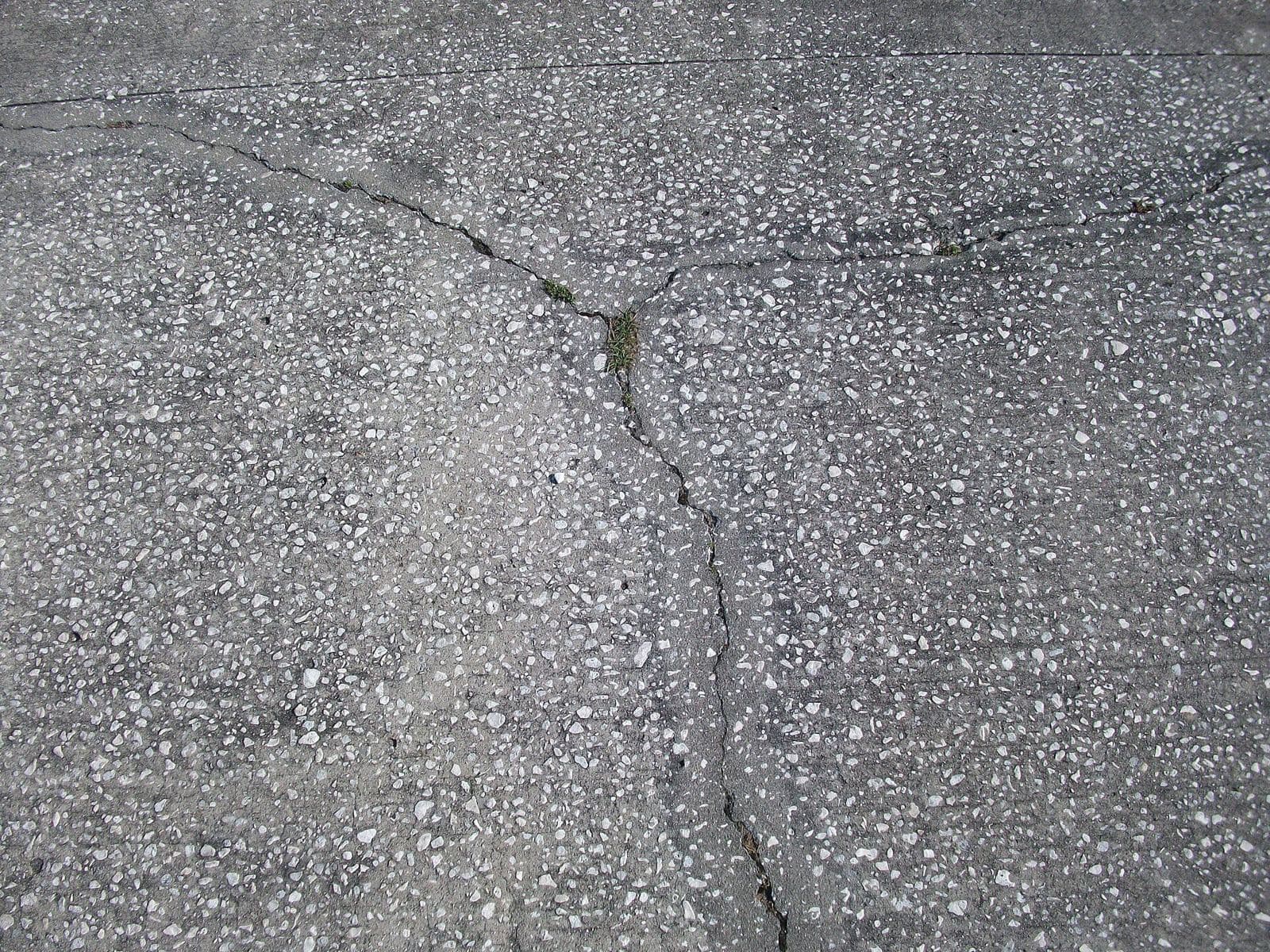
Steel doesn't stop cracks. Concrete shrinks as it dries regardless, and no reinforcement prevents that. What mesh does is stop a crack opening into a gap: the bars crossing it hold both sides together, so it stays hairline and the panel keeps working as one piece. Control joints decide where cracks go, and mesh keeps them tight. Why concrete driveways crack covers the rest.
What would your job cost?
Enter your size, finish and site conditions for an instant estimate, built from the same rates as the figures in this guide.
Common questions
Is SL72 or SL82 better for a driveway?
SL72 is the usual mesh for a 100mm driveway carrying cars. SL82 adds steel for heavier use or tighter crack control, which can be worth it under decorative finishes; CCAA notes decorative paving may need more steel than standard crack control.
Does a shed slab need mesh?
A small garden shed slab with foot traffic only can be built without it, but SL72 costs little and is standard on any shed you'll drive a mower or car into.
Sources
Prices in this guide come from our concrete price calculator and update when its rates are reviewed. They are estimates, not fixed quotes: the final price is confirmed at a free site inspection. Council rules were checked against each council's published policy and can change, so confirm with your council before you build.