Grip versus comfort
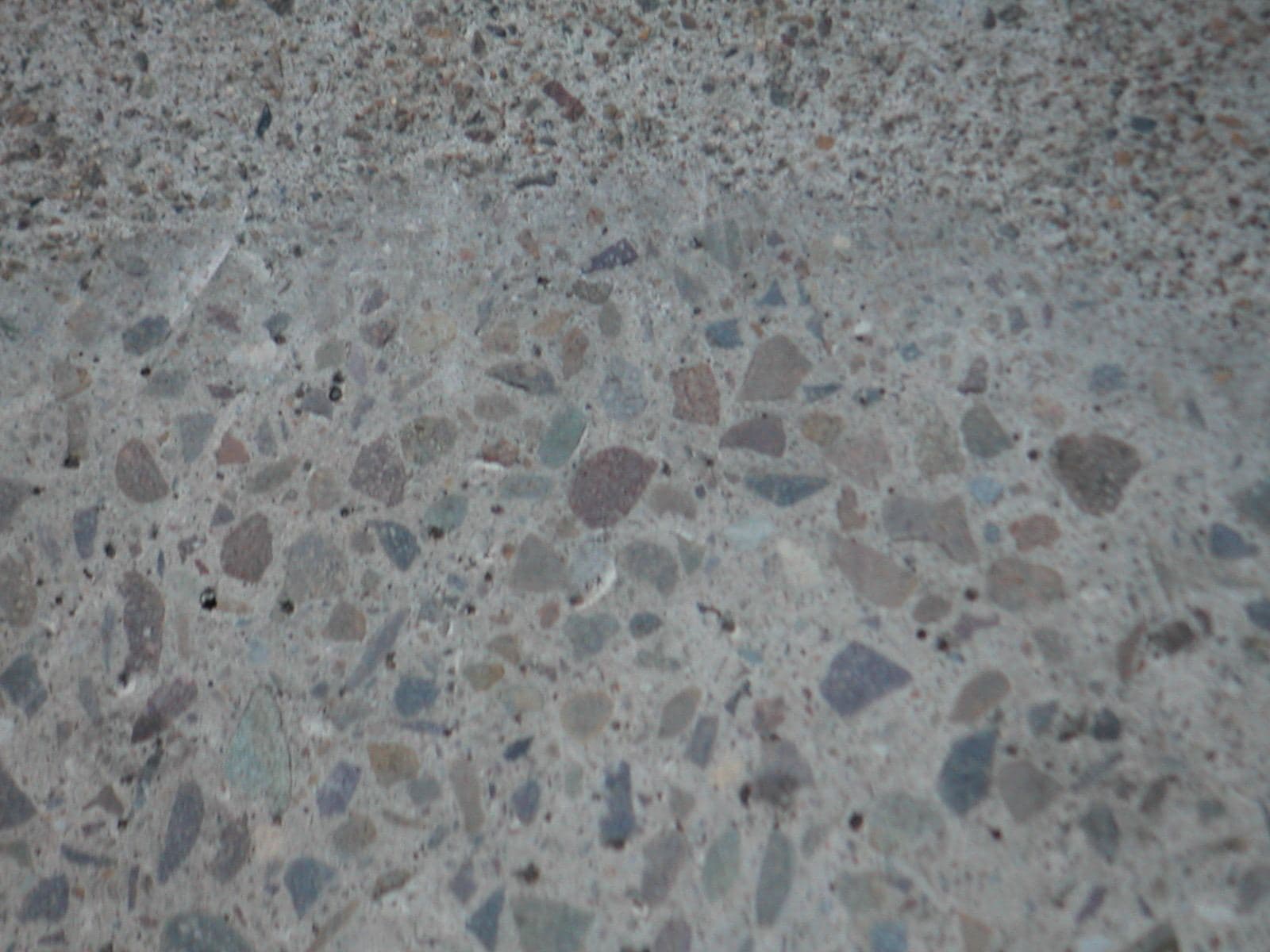
A pool surround has to grip when wet without scraping feet. That rules out the coarse broom or grooved textures used on steep driveways, and it's why CCAA lists wood float, light broom and smaller smooth exposed aggregate as suitable for barefoot areas. Exposed aggregate with small rounded pebbles is a popular choice in Sydney because it grips, hides dirt and is comfortable underfoot.
Comparing the finishes
| Finish | Underfoot | Upkeep | 40m² incl. GST |
|---|---|---|---|
| Light broom | Good grip, plain look | Low; sealing optional | $8,100–$8,800 |
| Coloured, broom or float | Same grip; colour affects heat | Seal to protect the colour | $8,850–$9,550 |
| Exposed aggregate, small smooth stone | Comfortable, good grip | Reseal every 3–5 years | $9,850–$10,550 |
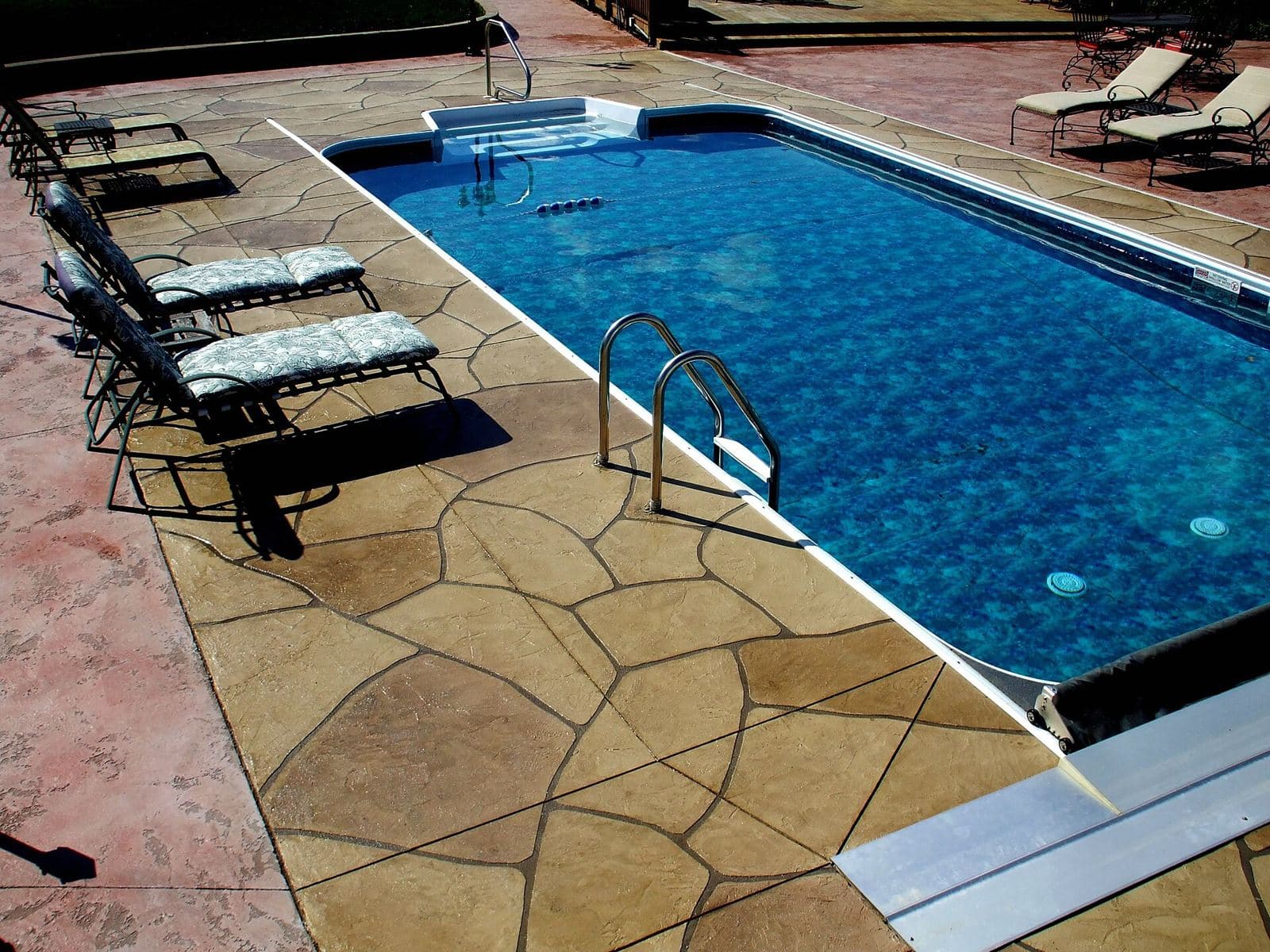
| Stamped | Slippery once sealed unless grit is added | Reseal every 3–5 years | $11,800–$12,500 |
Heat underfoot
Dark surfaces get hot in a Sydney summer. Charcoal concrete and dark aggregate can be hard to walk on barefoot in the afternoon sun, while light greys, creams and sandstone tones stay noticeably cooler. If the surround faces north or west with no shade, lean towards a lighter colour, even if a darker one would suit the house.
Chlorine, salt and sealers
Concrete handles pool water well; the sealer is what wears. Salt-water pools are harder on surrounds than chlorine, because splashed water evaporates and leaves salt crystals in the surface pores, which can flake the top of unsealed or poorly sealed concrete over time. A good sealer, kept up, prevents most of it, and hosing down the splash zone now and then helps.
Whatever the sealer, ask for a non-slip additive in the last coat. A gloss sealer over smooth pebbles or a stamped pattern turns slippery the moment it's wet.
Details that matter around a pool
- Joint at the coping. The surround has to move separately from the pool shell, so a flexible joint goes between the concrete and the coping or bond beam.
- Falls away from the water. The surface should drain away from the pool, to a grate or garden edge, so dirt and runoff don't wash in.
- Pool fence footings. Pool barriers in NSW must comply with AS 1926.1. Plan the fence post positions before the pour so posts can be cast in or core-drilled without cracking new concrete.
- Pipes and equipment. Mark the pool plumbing and light conduits before anyone digs.
- Access. Most surrounds are behind the house, so concrete often arrives by pump or barrow. See do you need a concrete pump?
Replacing old pavers or tiles
Many Sydney pool surrounds are old pavers lifting at the edges. Replacing them means lifting the pavers, checking the base and pouring a new slab. With pavers removed and access limited to a mini-machine, a 40m² surround comes to $10,200–$12,450 on our calculator. The pool surrounds page covers the finishes in more detail.
What would your job cost?
Enter your size, finish and site conditions for an instant estimate, built from the same rates as the figures in this guide.
Common questions
Is exposed aggregate good around a pool?
Yes, if the stone is small and rounded and the sealer has grit in it. Large or crushed stone is too rough for bare feet.
What colour concrete stays coolest around a pool?
Light colours such as off-white, light grey and sandstone stay coolest. Charcoal and dark aggregates absorb the most heat.
Sources
Prices in this guide come from our concrete price calculator and update when its rates are reviewed. They are estimates, not fixed quotes: the final price is confirmed at a free site inspection. Council rules were checked against each council's published policy and can change, so confirm with your council before you build.