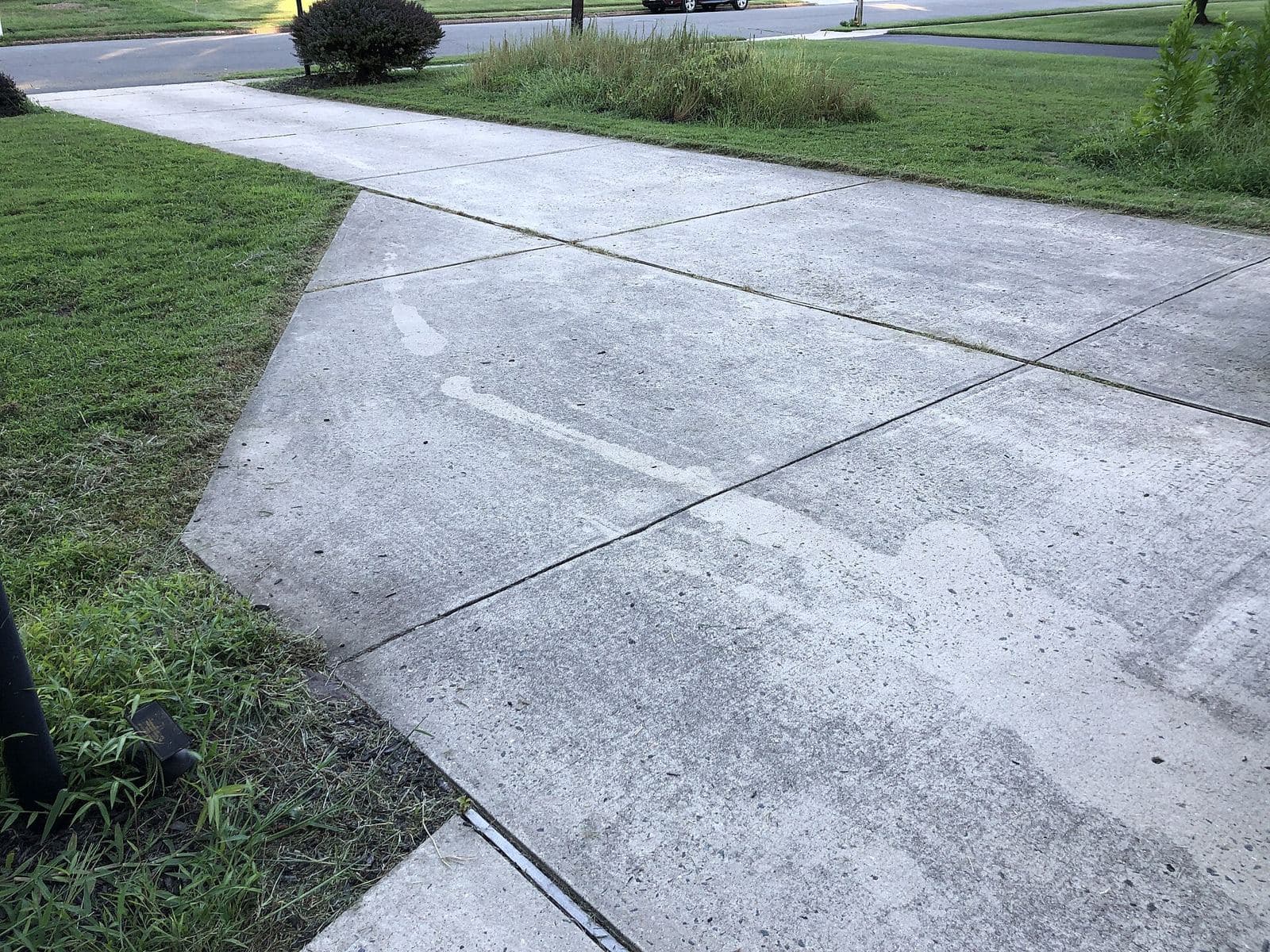
The days before the pour
- Set-out. Levels and edges are marked, and the finished height is checked against the garage, house slab and crossover.
- Excavation and demolition. Old concrete or pavers are broken out, topsoil is stripped and the ground is cut to depth. Spoil goes off site.
- Base. Road base is spread and compacted. Soft spots are dug out and replaced.
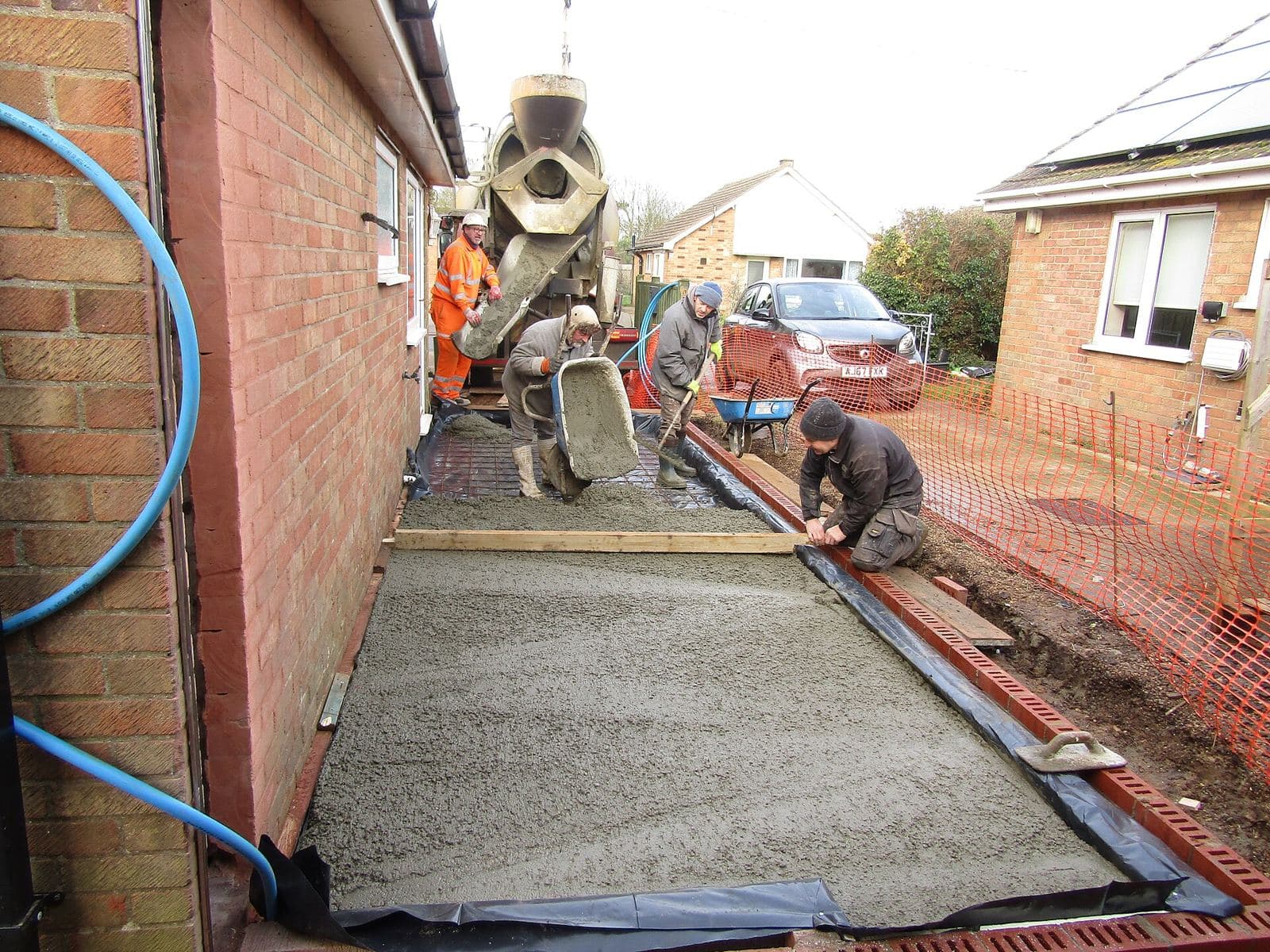
- Formwork. Timber or steel forms set the edges and the falls.
- Mesh and joints. Mesh goes in on bar chairs, and isolation joint material is fixed against the house and existing slabs.
- Inspection. If a council crossing is part of the job, the formwork and mesh may need inspecting before concrete can go in.
Depending on the job, that's one day or several. Heavy rain between preparation and pour can mean the base or formwork needs touching up.
Pour day
The concrete is booked from the plant for a set time, and once the truck arrives the clock is running: AS 1379 expects concrete to be discharged within 90 minutes of mixing starting, so everything has to be ready.
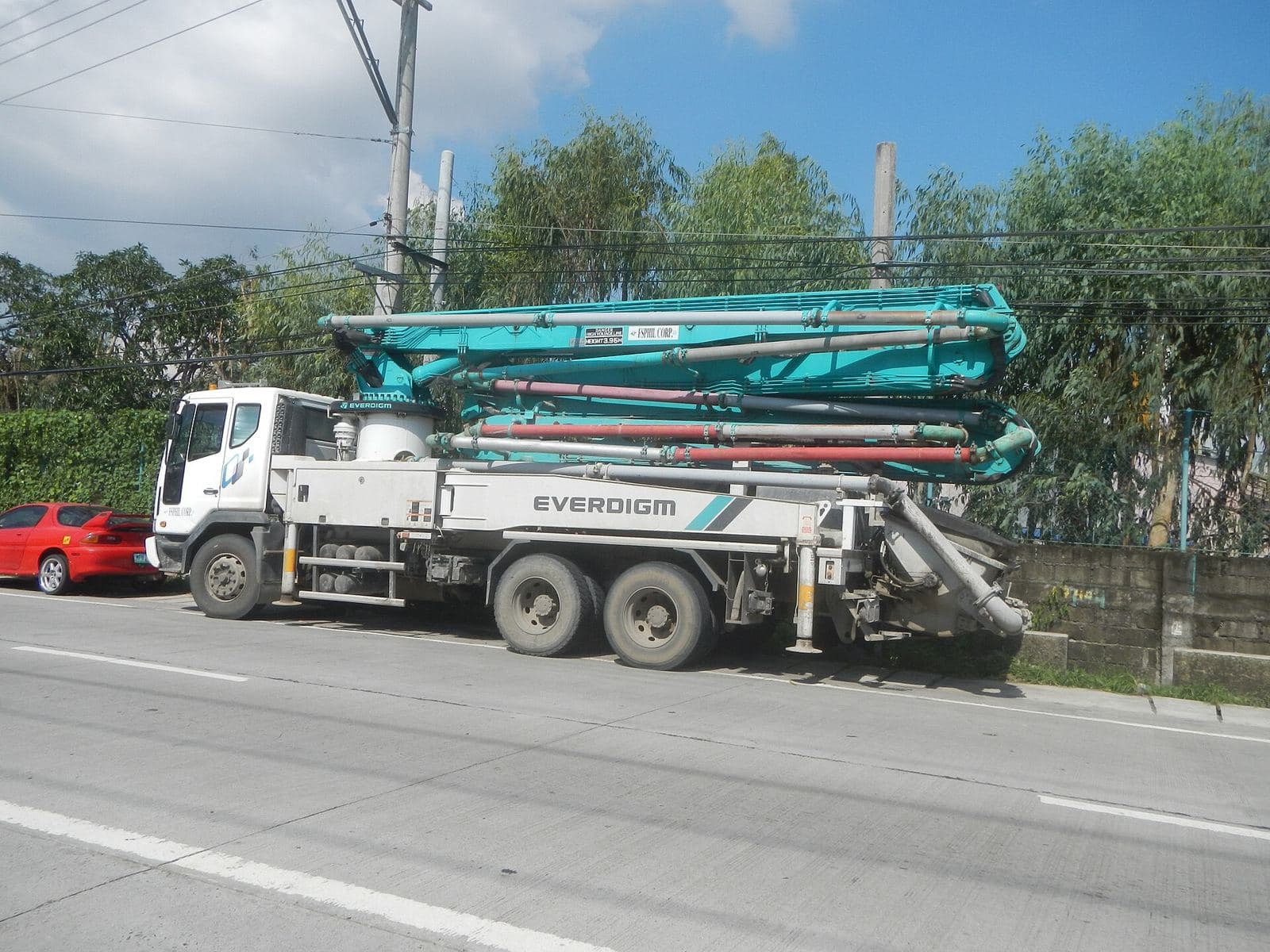
- Placing. Concrete comes off the truck's chute, through a pump hose or by wheelbarrow, starting from one corner, or the lowest point on a slope, and working out.
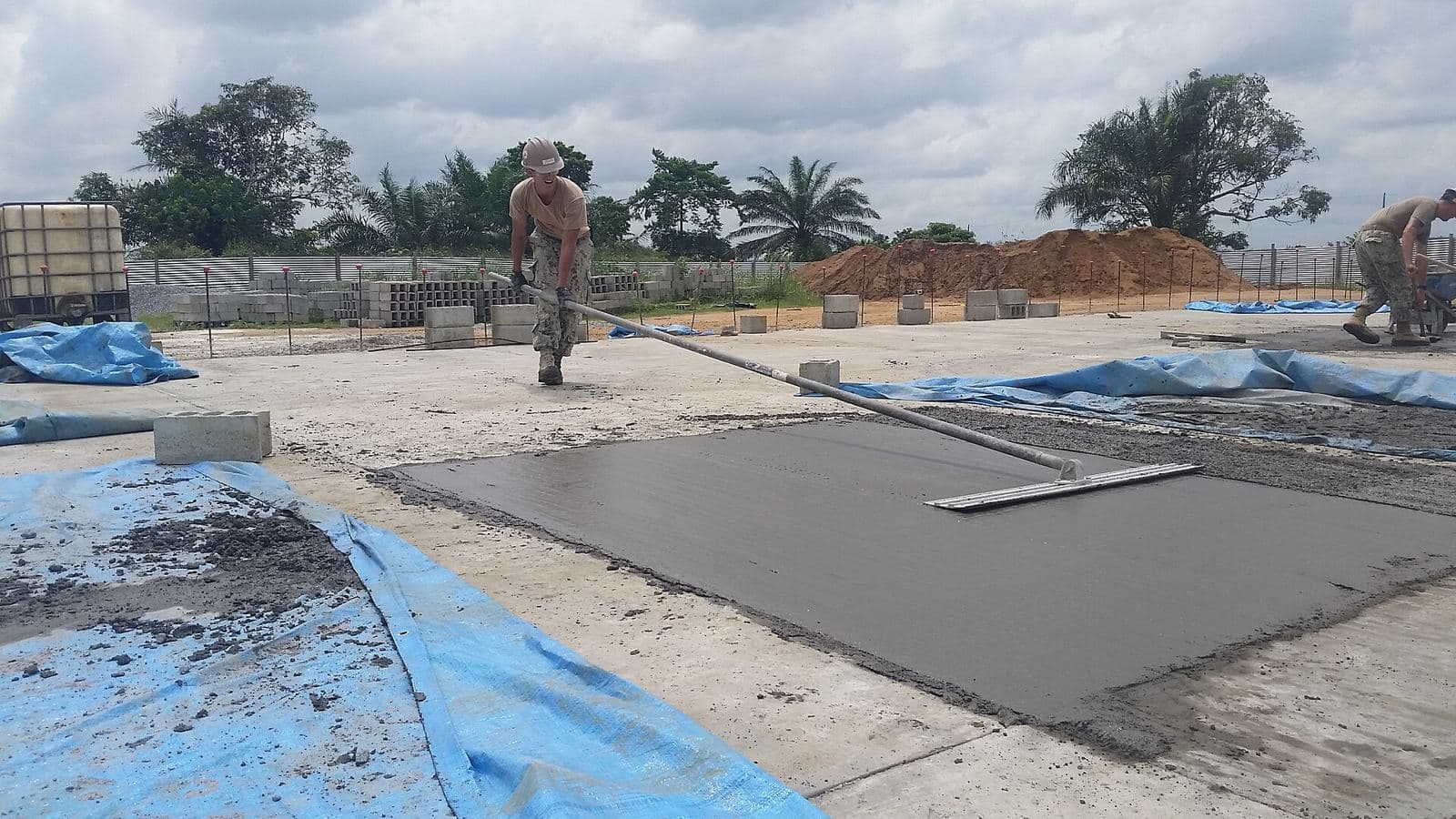
- Screeding. A straight edge is drawn across the forms to level the surface.
- Finishing. Once the surface water has gone, the slab is floated, the edges rounded and the finish applied: broom, trowel or the exposed aggregate wash.
- Joints. Control joints are tooled in now, or sawn later that day or early the next morning.
- Curing. A curing compound or cover goes on to hold moisture in.

Placing a typical driveway takes an hour or two, but finishing waits on the concrete, so the crew may be there well into the afternoon. Exposed aggregate is usually washed later the same day or the next morning.
Getting your property ready
- Cars out. Park on the street the night before. Your car won't be able to use the driveway for about a week.
- Clear access. The truck or pump needs a clear path. Move bins, pot plants and anything in the side passage if concrete is being barrowed or pumped through it.
- Point out weak spots. Concrete trucks are heavy. Mention old paths, pits, sewer covers or fragile kerbs the truck might cross.
- Water and power. The crew needs a working tap for clean-up and sometimes a power point.
- Pets and kids inside. Paw prints in fresh concrete are permanent.
- Tell the neighbours. A truck and pump can take up the street for a couple of hours, and the day starts early.
- Street permits. In some council areas, a pump or truck standing on the road needs a permit. Your concreter should know whether it applies.
Working hours
Construction hours are set by council and any development consent, and they differ across Sydney. Pours often start at the earliest permitted time because finishing needs the daylight hours ahead of it, especially in summer. In a strata building or a tight terrace street, check the permitted hours before booking.
After the pour
Formwork usually comes off within a day or two. Keep off the slab for 24 hours, keep cars off for about a week and heavy vehicles off for 28 days: how long before you can drive on new concrete has the full timeline.
If rain is forecast, ask what the plan is. Light rain after finishing is usually handled with plastic covers; heavy rain normally means moving the pour, which costs far less than repairing a washed-out surface. Our weather guide explains why.
Planning a concrete job?
Get your personalised quote from a vetted, licensed concreter near you.
Common questions
Do I need to be home on pour day?
Not necessarily, but be reachable early in case of an access problem, and try to be there at the end to see the finished slab and go over curing and when you can use it.
How long does a concrete pour take?
Placing a typical residential driveway takes one to two hours once the truck arrives. Finishing depends on the weather and the finish, so the crew may be on site most of the day.
Sources
- Cement Concrete & Aggregates Australia, Ordering Premixed Concrete data sheet
- Cement Concrete & Aggregates Australia, Residential Concrete Driveways and Paths data sheet (2026)
Prices in this guide come from our concrete price calculator and update when its rates are reviewed. They are estimates, not fixed quotes: the final price is confirmed at a free site inspection. Council rules were checked against each council's published policy and can change, so confirm with your council before you build.